
Working Equitation
The trials
Dressage test
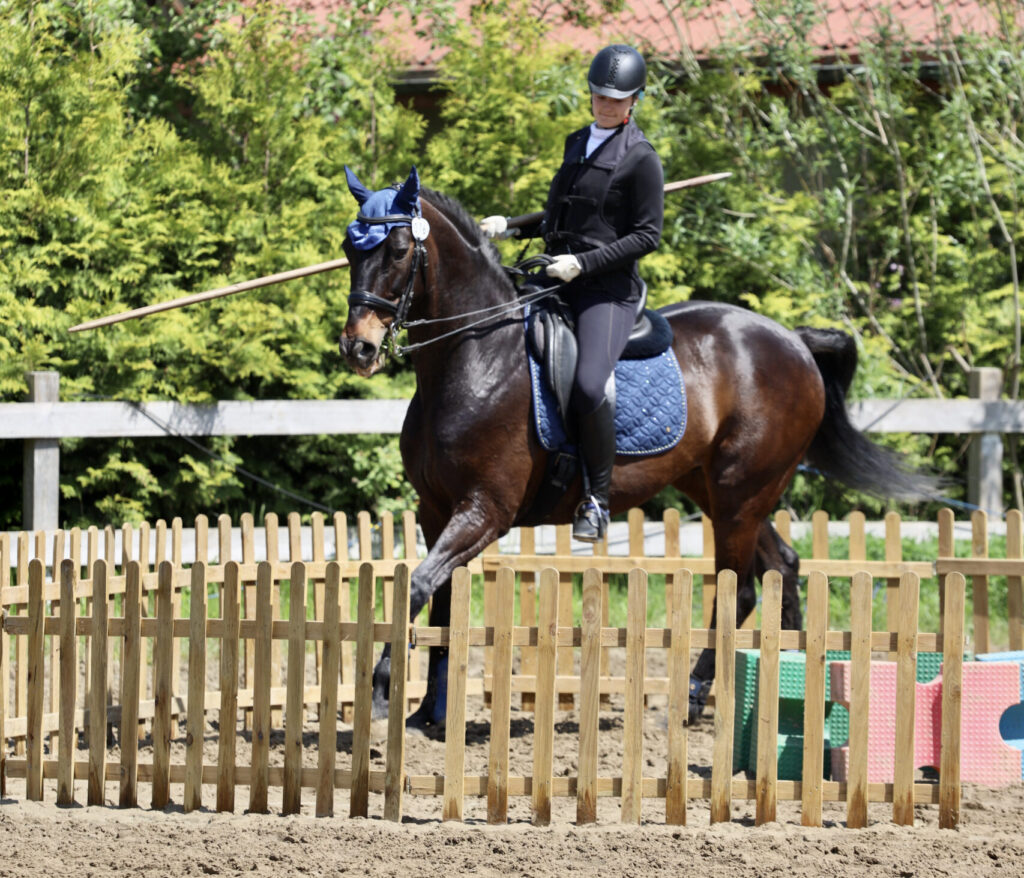
In Working Equitation the dressage test is usually ridden on the first day. It differs from classical dressage in that in the highest classes the horse is ridden with one hand, there is no piaffe or passage, and great emphasis is placed on flying changes and changes of pace in canter. To see what dressage looks like in the lower classes and to read the dressage tests, click the button below.

Ease of Handling test (Maneability)
The Ease of Handling test was created to show the horse’s handiness and its training for work in open country. The rider negotiates a dozen or more obstacles such as a slalom, a gate, a bridge or a pen. The obstacles must be ridden technically, showing the horse’s calmness and composure. Like dressage, Ease of Handling is judged for style on a 10-point scale. The time taken does not matter here — what counts is how the course is ridden. To learn more about the requirements of each class, click the button below.
Speed test
The most spectacular, though by no means the most important, trial in Working Equitation is the speed test. Riders negotiate the same obstacles as in Ease of Handling, but against the clock rather than for style. The judges assess only the time of the round, adding penalties for touching or knocking down an obstacle.

Cattle test (Cow test)

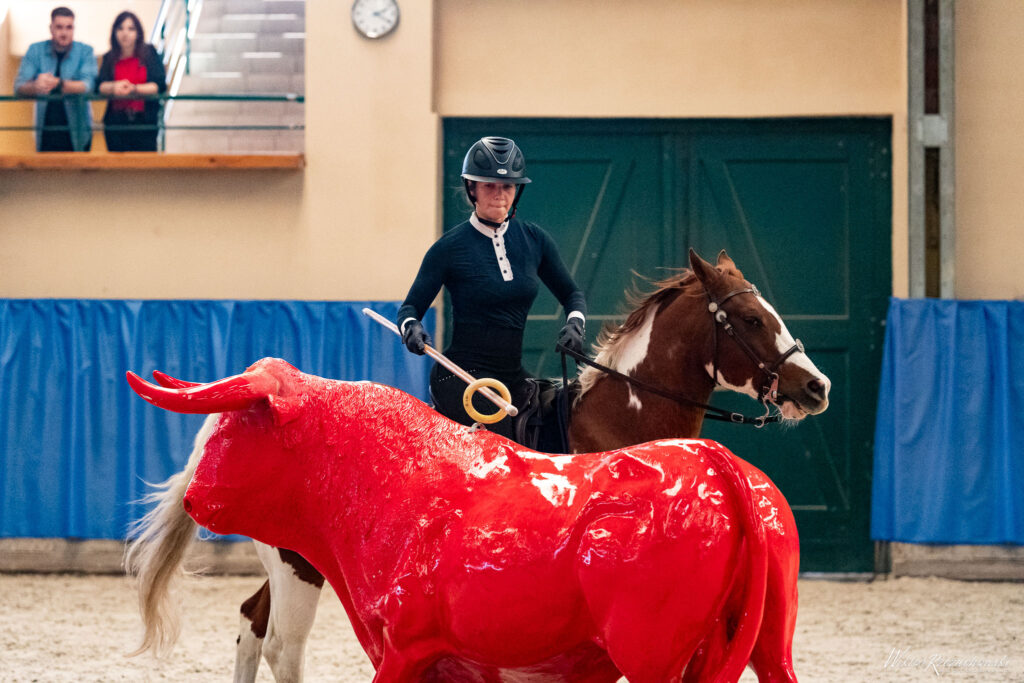
An increasingly rare trial, usually held only at championship level. There is no individual classification, only a team one. Four riders compete at the same time, and their task is to drive a selected cow from the herd into a pen. One rider drives the cow while the others hold the herd.
Any questions?
Get in touch
We are happy to help with competitions, licences, training and WEP membership.